



Hysteroscopy
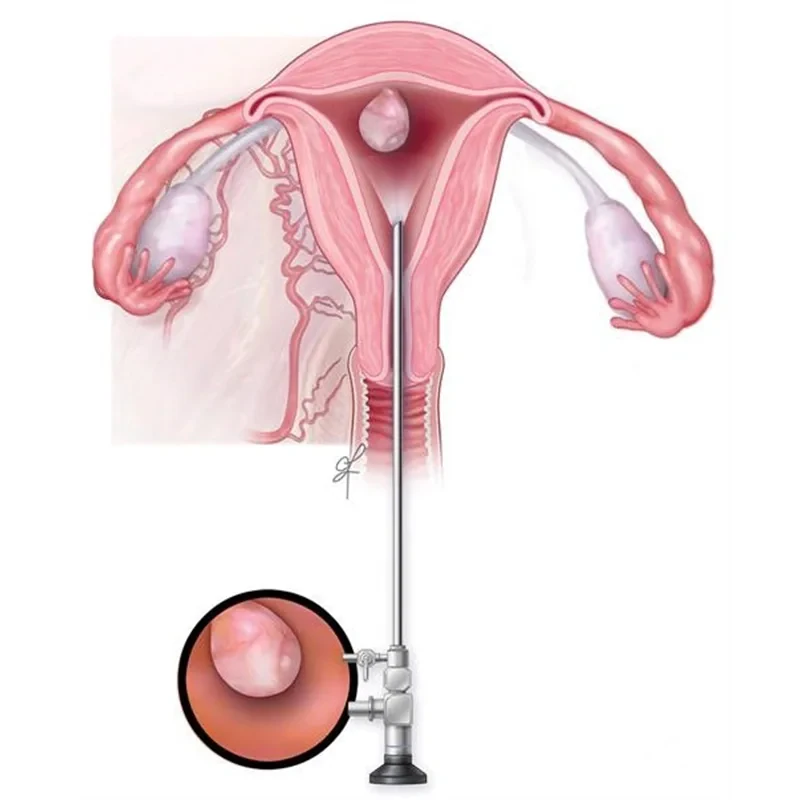
What Is a Hysteroscopy?
Hysteroscopy is a minimally invasive procedure that allows direct visualization of the uterine cavity using a small optical device called a hysteroscope.
It provides a precise view of the endometrial cavity, enabling both diagnosis and treatment of intrauterine disorders.
At Saga Clinic in Tirana, Dr. Eser Agar performs two forms of hysteroscopy:
- Office Hysteroscopy – Diagnostic, without anesthesia
- Operative Hysteroscopy – Therapeutic, performed under sedation or general anesthesia
Office hysteroscopy in Tirana — at a glance
- Where: Saga Clinic, Rruga Mustafa Xhabrahimi, Kompleksi AL-Konstruksion GBI, Godina 12, Farkë, Tirana (open in Google Maps). Mon–Fri 09:00–15:30 · Sat 09:00–14:00.
- Who: performed personally by Asst. Prof. Eser Ağar, MD. The doctor works in Tirana and in Istanbul — confirm your date on WhatsApp before you travel.
- No anesthesia; the procedure takes 5–20 minutes and you return to daily life the same day.
- Diagnosis and treatment in one session: if a polyp is seen, it is removed in the same session. If it cannot be removed, the procedure is ended and operative hysteroscopy is planned later in hospital. The pathology result is ready in 14 days.
- We recommend a painkiller before the procedure. Because the uterus is filled with fluid, you may feel a cramp similar to period pain; some patients feel no pain at all — it varies from person to person.
- It is planned for days 5–12 of your cycle; if you are in this window, it can be done on the day of your visit.
- Price: The visit (consultation with the doctor) costs 5,000 Lekë. Diagnostic office hysteroscopy 800 € (80,000 Lekë); biopsy +100 €. Operative hysteroscopy (American Hospital) 1,500 €.
Write on WhatsApp or call +355 69 836 15 65
Send us the first day of your last period and we will plan the right day.
1. Office Hysteroscopy
What Is It?
Office hysteroscopy using the office hysteroscopy system is a quick, in-clinic procedure performed without anesthesia.
It enables real-time inspection of the uterine cavity to detect abnormalities such as polyps, fibroids, or adhesions.
Because the device is portable and thin (less than 5 mm), it provides high-resolution imaging with minimal discomfort.
How It Is Performed
- The patient lies in a gynecological position.
- A thin hysteroscope is gently inserted through the cervix.
- The uterine cavity is distended with sterile saline for better visualization.
- The doctor examines the endometrium and cervical canal using a digital monitor.
The procedure takes 3–5 minutes and allows the patient to view the findings in real time.
Indications
- Abnormal uterine bleeding
- Postmenopausal bleeding
- Evaluation of endometrial polyps or fibroids
- Recurrent miscarriage or infertility
- Confirmation of ultrasound findings (e.g., thickened endometrium)
Advantages
- No anesthesia required
- Immediate diagnosis and visual confirmation
- Painless and safe (only mild pressure may be felt)
- Performed in an outpatient setting with same-day results
2. Operative Hysteroscopy (Under Sedation or General Anesthesia)
What Is It?
Operative hysteroscopy is a therapeutic procedure performed in the operating room under sedation or general anesthesia.
It allows the surgeon to not only see but also treat abnormalities inside the uterus using small instruments inserted through the hysteroscope.
How It Is Performed
- The patient receives sedation or short general anesthesia.
- A rigid or resectoscopic hysteroscope is gently inserted into the uterus.
- The uterine cavity is filled with sterile saline for clear visualization.
- Specialized instruments are used to remove or correct intrauterine pathology.
The procedure typically lasts 15–30 minutes, depending on complexity.
Indications
- Removal of endometrial polyps or submucosal fibroids (myomas)
- Treatment of intrauterine adhesions (Asherman’s syndrome)
- Biopsy or removal of abnormal tissue
- Resection of uterine septum or congenital anomalies
- Retrieval of lost IUDs
- Diagnostic and therapeutic management of abnormal bleeding
Recovery
- Most patients go home within a few hours.
- Mild cramps or light bleeding for 1–2 days are normal.
- Avoid intercourse, tampons, or vaginal douching for one week.
- Normal activities can usually be resumed the next day.
Office vs. Operative Hysteroscopy
| Feature | Office Hysteroscopy | Operative Hysteroscopy |
| Purpose | Diagnostic | Diagnostic + Therapeutic |
| Setting | Office / Clinic | Operating Room |
| Anesthesia | None | Sedation or General Anesthesia |
| Duration | 3–5 minutes | 15–30 minutes |
| Recovery | Immediate | 24 hours rest |
| Capability | Visual examination only | Polyp, myoma, adhesion removal, etc. |
The Saga Clinic Approach
At Saga Clinic, all hysteroscopic procedures are performed with the latest technology and highest safety standards.
The clinic combines office hysteroscopy for diagnostic clarity with operative hysteroscopy for complete treatment in complex cases.
Dr. Eser Agar and his team emphasize:
- Minimal patient discomfort
- Precision diagnosis and gentle technique
- Fertility-preserving surgical methods
- Comprehensive explanation before and after the procedure
Advantages for Patients
- Direct visualization of the uterine cavity
- Early diagnosis and targeted treatment
- Outpatient diagnostic options
- Quick recovery with minimal complications
- Integration with ultrasound, biopsy, and fertility care
Appointments and Contact
To schedule your hysteroscopy consultation or procedure, contact Saga Clinic Tirana online or via WhatsApp.
Dr. Eser Agar personally performs both office-based and operative hysteroscopies, ensuring accurate diagnosis, safe treatment, and a patient-centered experience.
For appointment requests or medical inquiries, please contact us using the options below.
📞 Clinic Phone (Office Hours)
+355 69 836 1565
Available Monday–Friday 09:00–15:30, Saturday 09:00–14:00.
💬 WhatsApp (Outside Office Hours)
+355 69 456 4467
Available outside office hours via WhatsApp Message only.
Author: Asst. Prof. Eser Ağar, MD — Obstetrician and Gynecologist
This page is for informational purposes and does not replace examination and physician evaluation.
Medically reviewed: Asst. Prof. Eser Ağar, MD —
 Call Now
 WhatsApp


