


Endometrial Hyperplasia
What Is Endometrial Hyperplasia?
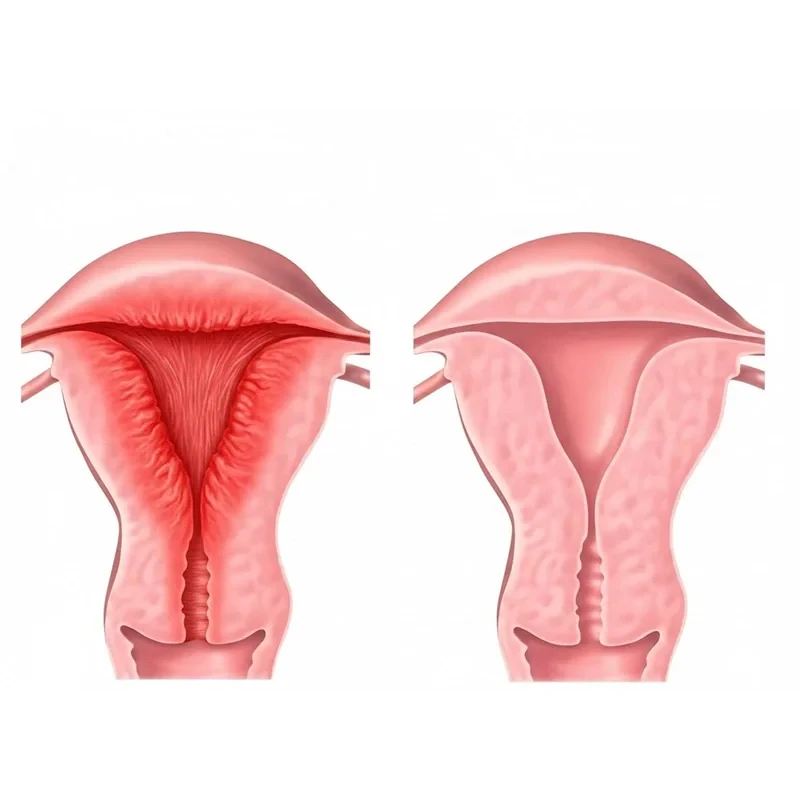
Endometrial hyperplasia refers to the abnormal thickening of the uterine lining (endometrium), often caused by prolonged estrogen exposure without adequate progesterone balance.
It can lead to irregular uterine bleeding and, in some cases, progress to endometrial cancer if not treated properly.
At Saga Clinic in Tirana, Dr. Eser Agar provides comprehensive evaluation and individualized management of endometrial hyperplasia using modern diagnostic techniques such as ultrasound, endometrial biopsy, and hysteroscopy.
How Does It Develop?
During a normal menstrual cycle, estrogen stimulates the endometrial lining to grow, while progesterone controls and stabilizes this growth after ovulation.
When progesterone is absent or insufficient — due to hormonal imbalance, anovulation, or menopause — the endometrium continues to thicken abnormally.
Over time, this unopposed estrogen stimulation can result in hyperplasia or even malignant transformation.
Risk Factors
- Irregular or absent ovulation (as in PCOS)
- Obesity (increased peripheral estrogen production)
- Perimenopause or menopause without progesterone therapy
- Estrogen-only hormone therapy
- Tamoxifen use (in breast cancer patients)
- Family history of endometrial or colon cancer
- Diabetes or insulin resistance
Symptoms
Endometrial hyperplasia may present with one or more of the following:
- Heavy or prolonged menstrual bleeding
- Bleeding between periods
- Postmenopausal bleeding
- Difficulty conceiving or recurrent miscarriage
- Pelvic discomfort or cramping
Any woman experiencing postmenopausal bleeding should be evaluated immediately.
Types of Endometrial Hyperplasia (WHO Classification)
- Simple Hyperplasia (without atypia): Mild thickening; low risk of progression.
- Complex Hyperplasia (without atypia): Glandular crowding; still low malignancy risk.
- Atypical Hyperplasia (with atypia): Cellular abnormalities; precancerous, 20–30% risk of progression to carcinoma.
Diagnostic Approach at Saga Clinic
1. Transvaginal Ultrasound
Initial evaluation to measure endometrial thickness.
- Normal postmenopausal lining: ≤ 4 mm
- Thickened endometrium (> 5 mm) requires further evaluation
2. Endometrial Biopsy (Pipelle or Curettage)
A tissue sample is obtained for histopathologic confirmation.
Performed either in-office using a pipelle or under general anesthesia for therapeutic curettage.
3. Hysteroscopy
Provides direct visualization of the uterine cavity and allows removal of focal lesions (e.g., polyps).
Combines diagnosis with treatment in one session.
4. Hormonal and Metabolic Evaluation
Includes assessment of estrogen, progesterone, FSH, LH, thyroid function, and insulin resistance.
Treatment Options
Management depends on the type of hyperplasia, age, fertility goals, and presence of atypia.
1. Without Atypia (Benign Forms)
- Progesterone therapy: Oral, injectable, or intrauterine (levonorgestrel IUD)
- Cycle regulation: To restore hormonal balance and protect the endometrium
- Follow-up: Repeat biopsy or ultrasound every 6 months
2. With Atypia (Precancerous Forms)
- Fertility-preserving approach: High-dose progesterone therapy and close follow-up
- Definitive treatment: Hysterectomy in women who have completed childbearing
- Regular colposcopy and ultrasound surveillance
3. Additional Options
- Endometrial ablation (for bleeding control in non-malignant cases)
- Weight loss and insulin control for metabolic contributors
- HPV vaccination and preventive gynecologic care
Prognosis and Follow-Up
With early diagnosis and appropriate therapy, endometrial hyperplasia can be completely reversible.
Regular follow-up every 6–12 months with ultrasound or biopsy is essential to prevent recurrence or malignant progression.
The Saga Clinic Approach
At Saga Clinic Tirana, Dr. Eser Agar applies an evidence-based, individualized approach for each patient.
By combining precise diagnostics (ultrasound + biopsy + hysteroscopy) with hormonal and surgical treatments, the clinic ensures safe, fertility-preserving outcomes whenever possible.
Core values:
- Early detection and prevention
- Minimally invasive management
- Comprehensive counseling and follow-up
- Integration of medical and surgical expertise
Advantages for Patients
- Accurate diagnosis with advanced imaging and histology
- Personalized hormonal or surgical therapy
- Fertility-preserving options
- Fast recovery and minimal discomfort
- Ongoing monitoring to ensure long-term health
Appointments and Contact
To schedule an evaluation for endometrial hyperplasia, contact Saga Clinic Tirana online or via WhatsApp.
Dr. Eser Agar and his experienced team provide complete diagnostic and therapeutic management for uterine health and cancer prevention.
For appointment requests or medical inquiries, please contact us using the options below.
📞 Clinic Phone (Office Hours)
+355 69 836 1565
Available Monday–Saturday, 09:00–16:00.
💬 WhatsApp (Outside Office Hours)
+355 69 362 0838
Available outside office hours via WhatsApp Message only.
 Call Now
  WhatsApp


