


PGT & Genetic Testing in IVF
What Is PGT?
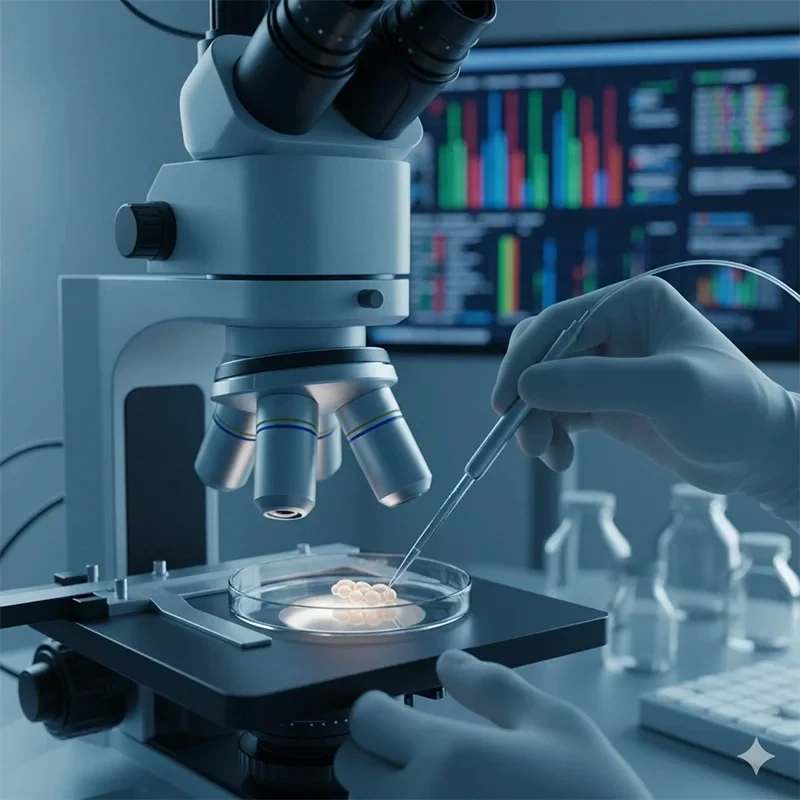
Preimplantation Genetic Testing (PGT) is a powerful technique used during IVF to analyze embryos before transfer, helping identify genetic or chromosomal abnormalities.
At Saga Clinic Tirana, Dr. Eser Agar offers advanced PGT methods to increase the chances of a healthy pregnancy, especially for couples with known risks or repeated IVF failures.
Types of PGT
1. PGT-A (Aneuploidy Screening)
PGT-A evaluates embryos for chromosomal abnormalities such as:
- Missing or extra chromosomes (aneuploidy)
- Trisomies (e.g., Down syndrome)
- Embryos with abnormal chromosome count
Benefits include:
- Higher implantation rates
- Lower miscarriage risk
- Identification of the healthiest embryos
- Improved success in women over 35
2. PGT-M (Monogenic Disease Testing)
Used to prevent transmission of specific inherited genetic diseases, such as:
- Thalassemia
- Cystic fibrosis
- Muscular dystrophy
- Sickle cell disease
- Fragile X
- Other single-gene disorders
This requires genetic analysis of the couple before IVF to identify the mutation.
3. PGT-SR (Structural Rearrangements)
Used for couples with chromosomal rearrangements such as:
- Translocations
- Inversions
- Duplications or deletions
PGT-SR helps select embryos with normal chromosomal structure and reduces miscarriage risk.
Who Should Consider PGT?
PGT is recommended for couples with:
- Advanced maternal age (35+)
- Recurrent IVF failure
- Recurrent pregnancy loss
- Known genetic mutations (PGT-M)
- Severe male factor infertility
- Chromosomal rearrangements (PGT-SR)
- Family history of genetic conditions
- Desire to minimize miscarriage risk
PGT is optional, but often highly beneficial.
How PGT Works at Saga Clinic
1. IVF Cycle and Embryo Culture
Embryos are grown to day-5 or day-6 (blastocyst stage).
2. Embryo Biopsy
A small number of cells are gently removed from the embryo’s trophectoderm (future placenta).
The embryo is not harmed and continues to develop normally.
3. Genetic Analysis
Biopsied cells are examined using specialized laboratory technology:
- Next-generation sequencing (NGS)
- Array-CGH
- PCR-based mutation analysis (for PGT-M)
4. Embryo Freezing
After biopsy, embryos are frozen while results are processed.
5. Transfer of the Best Embryo
A healthy, normal embryo is selected and transferred in a controlled frozen embryo cycle.
Benefits of PGT
- Higher pregnancy rates
- Lower miscarriage rates
- Reduced risk of genetic disease
- Fewer failed embryo transfers
- Better embryo selection
- Safer treatment for women over 35
- More predictable IVF outcomes
Limitations of PGT
While highly beneficial, PGT:
- Cannot guarantee 100% normal development
- May not identify every genetic condition
- Is more costly than standard IVF
- Requires a strong embryology laboratory infrastructure
However, for selected couples, the benefits often outweigh the limitations.
Why Choose Saga Clinic for PGT?
- Collaboration with high-standard genetic laboratories
- Accurate embryo monitoring and biopsy
- Modern technology for reliable results
- Personalized guidance on whether PGT is necessary
- Expert decision-making by Dr. Eser Agar
- Supportive counseling during the IVF journey
Your embryo selection process becomes clearer, safer, and more precise with PGT.
Appointments and Contact
If you are considering PGT or want to know whether it is right for your situation, we are here to help.
Contact Saga Clinic Tirana to discuss your options.
Contact & Appointments
For appointment requests or medical inquiries, please contact us using the options below.
📞 Clinic Phone (Office Hours)
+355 69 836 1565
Available Monday–Saturday, 09:00–16:00.💬 WhatsApp (Outside Office Hours)
+355 69 456 4467
Available outside office hours via WhatsApp Message only.
Author: Asst. Prof. Eser Ağar, MD — Obstetrician and Gynecologist
This page is for informational purposes and does not replace examination and physician evaluation.
Medically reviewed: Asst. Prof. Eser Ağar, MD —
 Call Now
  WhatsApp


