


Cryotherapy Wart Treatment (Freezing Therapy for Genital Warts)
Understanding its limitations, recurrence risk, and when it should—and should not—be used
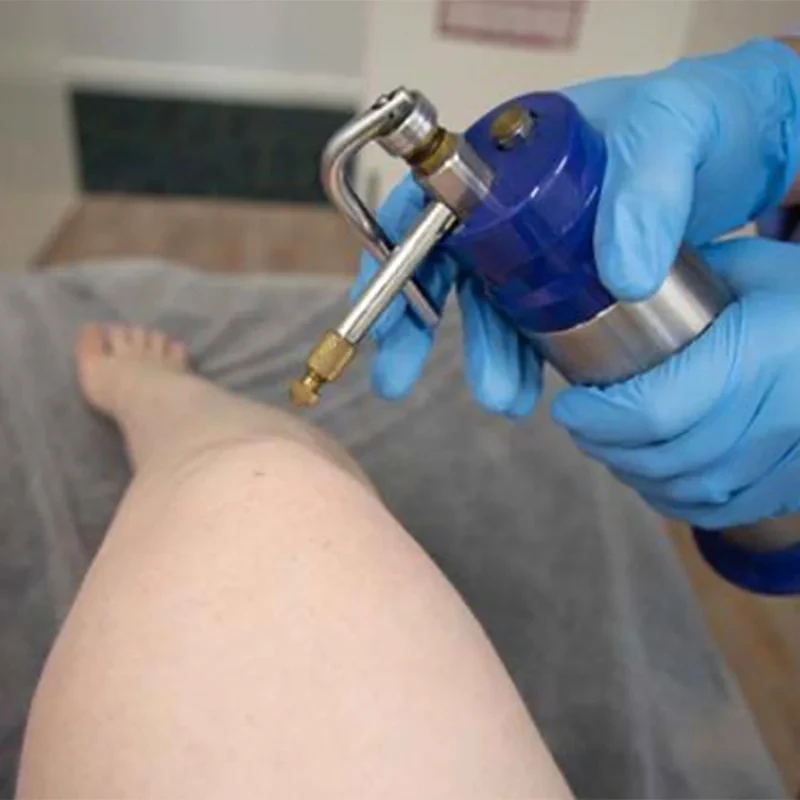
Cryotherapy removes genital warts (lythat) by freezing them with liquid nitrogen.
It is commonly used worldwide, but for genital warts specifically, the technique has significant limitations.
At Saga Clinic, Dr. Eser Agar applies laser provide far better precision, depth control, and long-term success.
How Cryotherapy Works
Liquid nitrogen is applied directly onto the wart, rapidly freezing the tissue.
The frozen tissue later blisters, peels, and falls off.
However, genital warts frequently extend deeper beneath the surface, and cryotherapy cannot reliably reach the root of the lesion.
This limitation is the main reason for its high recurrence rate.
Limitations of Cryotherapy
1. Insufficient Depth Penetration
Cryotherapy freezes the surface only.
It does not reach deeper viral structures, meaning the “root” of the wart often remains intact.
→ High recurrence risk
2. Multiple Sessions Are Usually Needed
Most patients require:
- 3
- 4
- sometimes 5+ sessions
to achieve partial clearance.
3. High Recurrence Rate Compared to Other Methods
Because the base of the lesion often survives, cryotherapy has one of the highest recurrence rates among wart treatments.
Laser and RF—by contrast—destroy the wart completely in a single session.
4. Less Precision
Liquid nitrogen spreads unevenly, causing:
- Unpredictable tissue injury
- Blisters
- Surrounding skin irritation
5. Not Ideal for Genital Tissue
Cryotherapy is widely used for hand/foot warts,
but genital skin is thinner, more sensitive, and more prone to damage.
6. Slower Healing
Recovery may involve:
- Swelling
- Blistering
- Fluid discharge
- Pain lasting several days
Recovery is slower than with laser or RF.
When Cryotherapy May Be Used
Cryotherapy can be used for:
- Small, superficial warts
- Patients who cannot undergo laser or RF
- Anatomical areas where freezing may be safer
- Mild cases needing temporary control
Even in these situations, laser remains the superior option.
What to Expect During the Procedure
- Application of liquid nitrogen (spray or probe)
- Strong cold sensation
- Skin whitening (“freeze reaction”)
- Blister formation within hours
- Peeling over days
Procedure time: 2–5 minutes
But again — likely multiple sessions.
Recovery and Aftercare
After cryotherapy:
- Blisters may last 1–2 days
- Area becomes red and swollen
- Light discharge may occur
- Avoid sexual intercourse 5–7 days
- Keep the area dry
- Avoid shaving until healed
Pain may be moderate and last longer than with laser or RF procedures.
Comparison With Other Treatments
| Treatment | Precision | Sessions Needed | Recurrence | Healing Time | Best Use |
| Laser | Highest | 1 | Lowest | Fast | Genital warts (gold standard) |
| Radiofrequency | High | 1 | Low | Fast | Genital warts (alternative) |
| Electrocautery | Moderate | 1 | Moderate | Slower | Select cases only |
| Cryotherapy | Low | Multiple | High | Slow | Only when other options unavailable |
Cryotherapy is an older technique with limited success in genital areas.
Why Saga Clinic Prefers Laser and Radiofrequency
Under the care of Dr. Eser Agar, the preferred methods are:
- Laser → Best for precision and recurrence prevention
- Radiofrequency → Best alternative when laser is not available
These methods offer:
- Complete removal in one session
- Minimal pain
- Faster healing
- Lower recurrence
- Better cosmetic outcomes
Cryotherapy is used only when clearly appropriate.
Book Your Appointment
If you would like an expert evaluation of genital warts and guidance on the safest and most effective treatment method, you can contact Saga Clinic and Dr. Eser Agar directly for a confidential appointment.
For appointment requests or medical inquiries, please contact us using the options below.
📞 Clinic Phone (Office Hours)
+355 69 836 1565
Available Monday–Saturday, 09:00–16:00.
💬 WhatsApp (Outside Office Hours)
+355 69 362 0838
Available outside office hours via WhatsApp Message only.
 Call Now
  WhatsApp


