


HPV Types: Low-Risk and High-Risk Explained
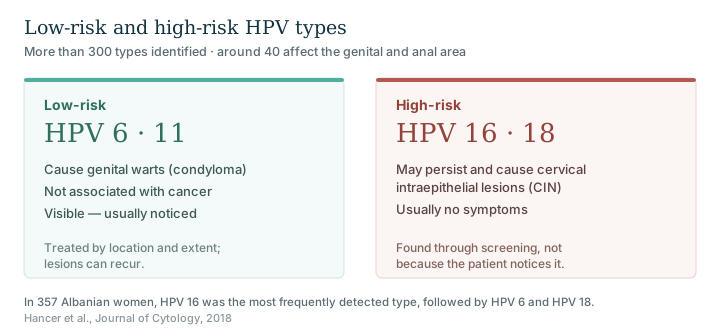
More than 300 HPV types have been identified. Around 40 of them can infect the genital and anal areas. They do not all carry the same risk, which is why the type matters more than the fact of infection itself.
Low-risk types
Low-risk types cause genital warts (condyloma) but are not associated with cancer. HPV 6 and HPV 11 account for the majority of genital wart cases.
These infections are visible and treatable, but they can recur. Treatment removes the lesion; it does not by itself clear the virus.
High-risk types
High-risk types can cause persistent infection and cervical intraepithelial lesions (CIN), which may progress over years if left unmonitored. HPV 16 and HPV 18 are the types most often implicated.
These types usually cause no symptoms. They are detected through screening, not because the patient notices something.
Which types are most common in Albania
In a study of 357 Albanian women, HPV 16 was the most frequently detected type, followed by HPV 6 and HPV 18.
What should I do?
An HPV DNA test identifies which type is present. That result determines the next step: routine follow-up where a low-risk type is found, or closer monitoring and colposcopy where a high-risk type persists.
Visible warts are treated according to their location and extent. Vaccination is a separate question and is discussed according to age and history.
Sources
- Hancer VS, Buyukdogan M, Bylykbashi I, Oksuz B, Acar M. Prevalence of human papilloma virus types in Turkish and Albanian women. Journal of Cytology. 2018;35(4):252–254. PubMed 30498300
- ICO/IARC HPV Information Centre. Albania: human papillomavirus and related cancers, fact sheet. hpvcentre.net
Medically reviewed by Asst. Prof. Eser Ağar, MD · 14 September 2026
 Call Now
  WhatsApp


